
TÂM TRÍ - ĐÀ NẴNG
Bệnh viện đa khoa
 Vietnamese
 English
U XƠ TỬ CUNG: KHI NÀO CẦN ĐIỀU TRỊ?
Thứ ba, 15/09/2026, 15:59 GMT+7
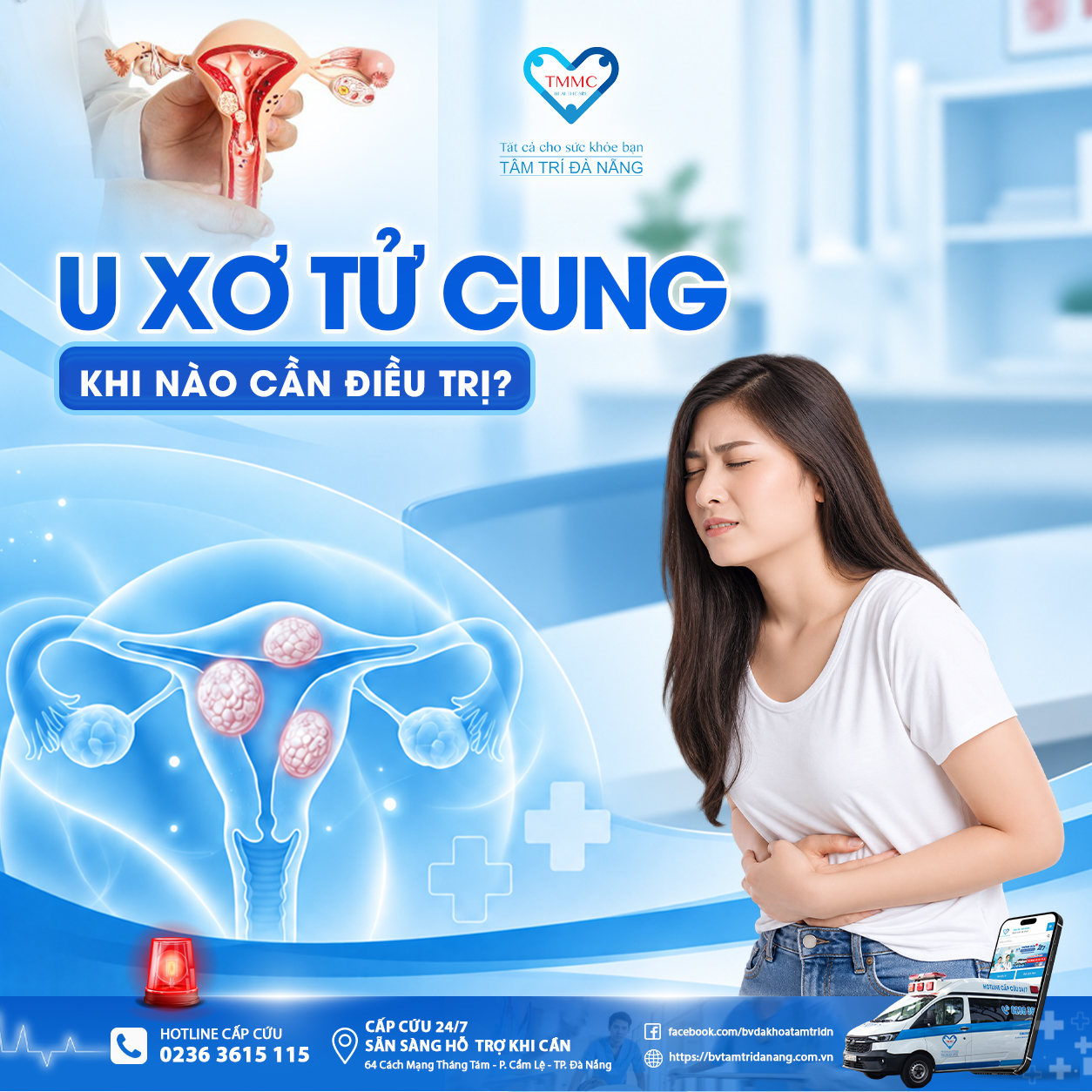
Khi nào cần điều trị?
Bác sĩ có thể cân nhắc điều trị khi u xơ gây ra một hoặc nhiều vấn đề như:
Rong kinh, cường kinh hoặc chảy máu tử cung bất thường, có thể dẫn đến thiếu máu.
Đau hoặc cảm giác nặng vùng bụng dưới, vùng chậu.
Khối u chèn ép các cơ quan lân cận, gây tiểu nhiều, khó tiểu hoặc táo bón.
Ảnh hưởng đến khả năng mang thai hoặc thai kỳ ở một số trường hợp.
Khối u phát triển hoặc có đặc điểm cần được bác sĩ theo dõi, đánh giá thêm.
Nếu u xơ nhỏ, không gây triệu chứng và chưa ảnh hưởng đến sức khỏe, người bệnh có thể chỉ cần theo dõi định kỳ theo hướng dẫn của bác sĩ.
Các phương pháp điều trị
Tùy vào kích thước, vị trí, số lượng khối u, triệu chứng, tuổi và nhu cầu sinh sản, bác sĩ có thể lựa chọn:
Theo dõi định kỳ: áp dụng với những trường hợp chưa cần can thiệp.
Điều trị nội khoa: giúp kiểm soát một số triệu chứng như ra máu nhiều hoặc đau.
Can thiệp/phẫu thuật: được cân nhắc khi u xơ gây triệu chứng rõ rệt, ảnh hưởng đến sức khỏe, khả năng sinh sản hoặc không đáp ứng với điều trị phù hợp.
Không phải cứ phát hiện u xơ tử cung là phải phẫu thuật. Việc lựa chọn phương pháp điều trị cần được bác sĩ Sản – Phụ khoa đánh giá dựa trên tình trạng cụ thể của từng người bệnh.
Nếu được phát hiện u xơ tử cung, hãy thăm khám chuyên khoa để được đánh giá và lựa chọn hướng xử trí phù hợp.
—-------------------------------------------
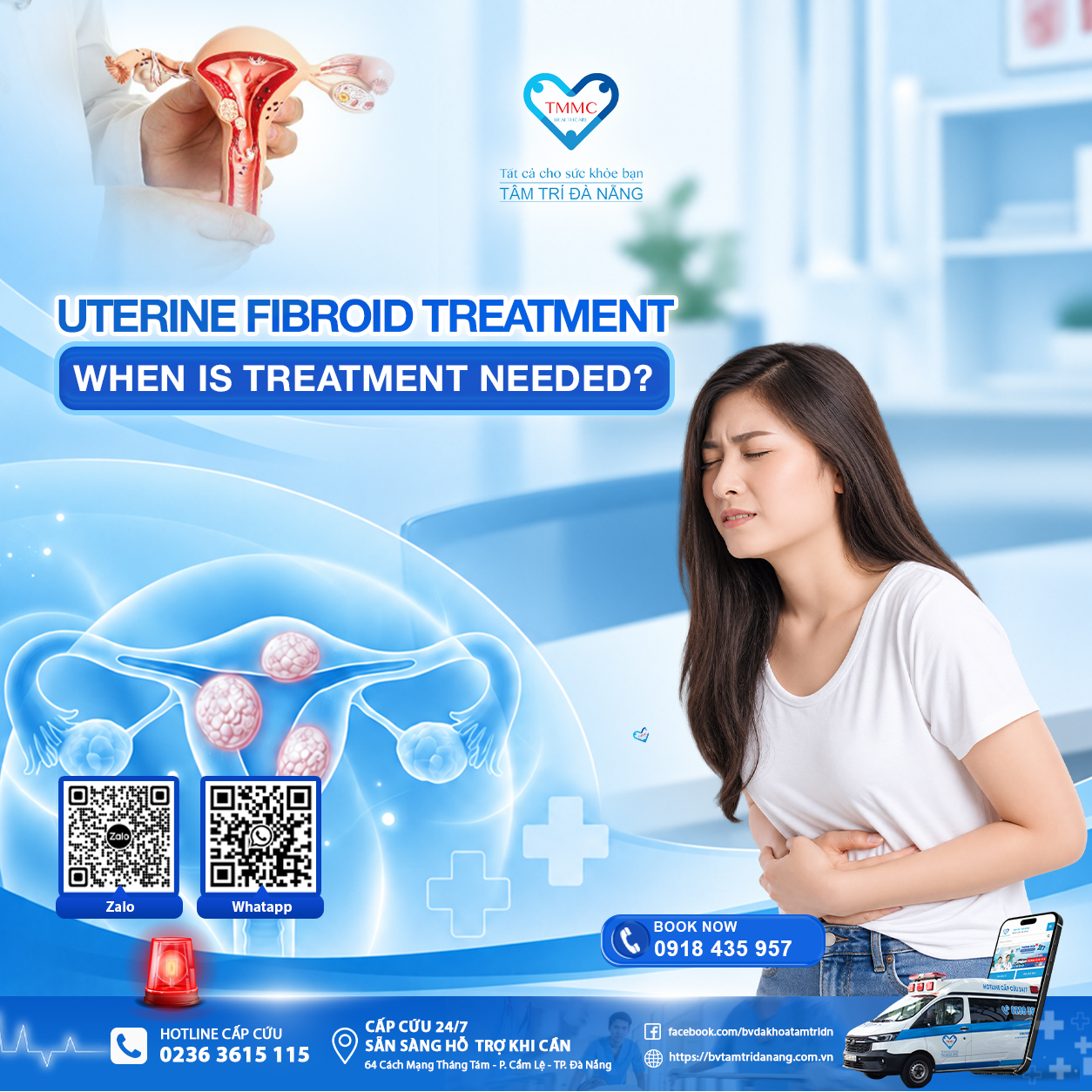
ENG: UTERINE FIBROIDS: WHEN IS TREATMENT NEEDED?
Uterine fibroids are a common gynecological condition in women of reproductive age. Most fibroids are benign, and not every case requires treatment.
When is treatment needed?
A doctor may consider treatment when fibroids cause one or more of the following problems:
• Prolonged or heavy menstrual bleeding, or abnormal uterine bleeding, which may lead to anemia.
• Pain or a feeling of heaviness in the lower abdomen or pelvic area.
• Pressure on nearby organs, causing frequent or difficult urination or constipation.
• In some cases, affecting the ability to become pregnant or the course of pregnancy.
• Fibroid growth or features that require further monitoring and evaluation by a doctor.
If the fibroid is small, does not cause symptoms, and has not affected the patient’s health, regular monitoring as advised by the doctor may be all that is needed.
Treatment options
Depending on the size, location, and number of fibroids, symptoms, age, and reproductive plans, the doctor may recommend:
Regular monitoring: appropriate for cases where intervention is not yet necessary.
Medical treatment: helps control certain symptoms such as heavy bleeding or pain.
Interventional procedures/surgery: considered when fibroids cause significant symptoms, affect health or fertility, or do not respond to appropriate treatment.
Being diagnosed with uterine fibroids does not necessarily mean that surgery is required. The choice of treatment should be made by an Obstetrician-Gynecologist based on each patient’s individual condition.
If you are diagnosed with uterine fibroids, please consult an Obstetrics and Gynecology specialist for evaluation and appropriate management.
International Patient Center – Tam Tri Da Nang General Hospital, Room 206
- Phone: 0918435957
- Email: bhqt.dn@tmmchealthcare.com
------------------------
TAM TRI DA NANG GENERAL HOSPITAL
- Address: 64 Cach Mang Thang 8 Street, Da Nang, Vietnam
- Website: bvtamtridanang.com.vn
- Consultation & Appointment Hotline: 0236 3679 555
- Emergency: 02363 615 115 (24/7)


Các tin khác :
- PHẪU THUẬT NỘI SOI MỞ ỐNG MẬT CHỦ LẤY SỎI, DẪN LƯU KEHR, CẮT TÚI MẬT (22/10/2026)
- KIỂM SOÁT ĐƯỜNG HUYẾT THAI KỲ MẸ AN TÂM CON KHỎE MẠNH (07/10/2026)
- PHẪU THUẬT CỐ ĐỊNH VÀ GIẢI ÉP CỘT SỐNG QUA C-ARM (22/09/2026)
- HIỂU ĐÚNG VỀ CÁC LOẠI LOÃNG XƯƠNG: BẠN ĐANG Ở NHÓM NGUY CƠ NÀO? (07/09/2026)
- PHẪU THUẬT NỘI SOI CẮT TỬ CUNG TOÀN PHẦN: ĐIỀU TRỊ TRIỆT ĐỂ, ÍT XÂM LẤN, NHANH HỒI PHỤC (20/08/2026)
- CẢNH BÁO VIÊM NÃO Ở BỆNH NHÂN LỚN TUỔI: DẤU HIỆU DỄ NHẦM LẪN, DIỄN BIẾN NGUY HIỂM (14/08/2026)
- PHẪU THUẬT ÍT XÂM LẤN, KHÔNG MỞ Ổ GÃY DƯỚI C-ARM CHO BỆNH NHÂN GÃY DI LỆCH HAI MẮT CÁ CHÂN PHỨC TẠP (12/08/2026)
- NHẬN BIẾT ĐỘT QUỴ BẰNG QUY TẮC FAST (05/08/2026)
- NỘI SOI GẮP THÀNH CÔNG VẮT CÒN SỐNG TRONG MŨI NAM THIẾU NIÊN 15 TUỔI SAU KHI TẮM SUỐI (03/08/2026)
- Phẫu thuật kết hợp xương qua C-arm thành công cho bệnh nhân gãy xương đòn (28/07/2026)
 Tất cả cho sức khỏe bạn